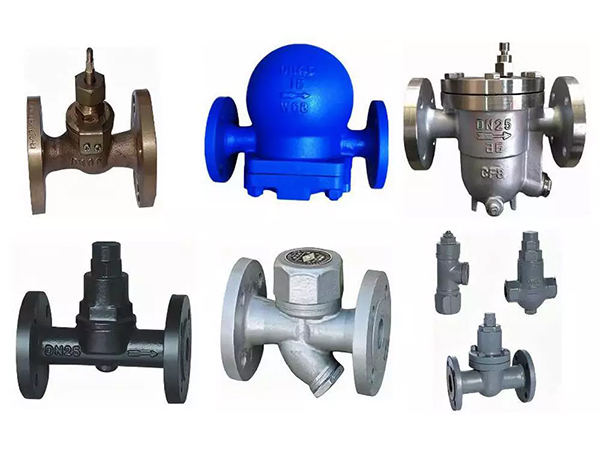
Steam trap in the steam heating system plays a role in preventing steam drainage, choose the right trap, can make the steam heating equipment to achieve the highest efficiency. In order to achieve the best results, it is necessary to have a comprehensive understanding of the working performance and characteristics of various types of traps.
There are many varieties of traps, each with different performance. When choosing a trap, first choose its characteristics to meet the best operation of the steam heating equipment, and then consider other objective conditions, so that the selection of the trap you need is correct and effective.
The trap should be able to "identify" steam and condensate in order to prevent steam drainage. The "identification" of steam and condensate is based on three principles: density difference, temperature difference, and phase transition. Therefore, three types of traps are manufactured according to three principles, which are classified as mechanical, thermostatic and thermodynamic.
1. Mechanical trap
Mechanical type, also known as float type, is to use the density difference between condensate and steam, through the change of condensate level, so that the float lift drives the valve flap to open or close, to achieve the purpose of steam drainage. The supercooling degree of the mechanical trap is small, not affected by the working pressure and temperature changes, there is water that is discharged, and there is no water stored in the heating equipment, which can make the heating equipment achieve the best heat exchange efficiency. The maximum back pressure rate is 80%, the working quality is high, and it is the ideal trap for the production process heating equipment.
Mechanical trap has free float type, free half float type, lever float type, inverted bucket type and so on.
2. Thermostatic trap
This type of trap uses the temperature difference between steam and condensate to cause the deformation or expansion of the temperature sensing element to drive the spool to open and close the valve. The supercooling degree of the thermostatic trap is relatively large, and the general supercooling degree is 15 degrees to 40 degrees. It can use part of the sensible heat in the condensate, and there is always high temperature condensate in front of the valve, without steam leakage, and the energy saving effect is significant. It is the ideal trap for steam pipelines, tracing pipelines, small heating equipment, heating equipment, and small heating equipment with low temperature requirements.
Thermostatic trap has diaphragm type, bellows type, bimetal plate type and so on.
3. Thermal steam trap
According to the principle of phase change, this type of trap depends on the different thermodynamic principles of the flow rate and volume change when the steam and condensate pass through, so that different pressure differences are generated up and down the valve plate, and the valve plate is driven to switch the valve. Because the working power of the thermal steam trap comes from steam, the steam waste is relatively large.
Simple structure, water shock resistance, the maximum back of 50%, noise, frequent valve plate work, short service life.
Thermal steam trap has thermal power type (disc type), pulse type, hole plate and so on.